field guide
Long Distance Caregiving: Running a Parent's Week From Another State
You cannot drive over at seven in the evening, so every part of the week has to be built in advance. How to assemble a local bench, turn each visit into an inspection, and read the small signals that say something is slipping.
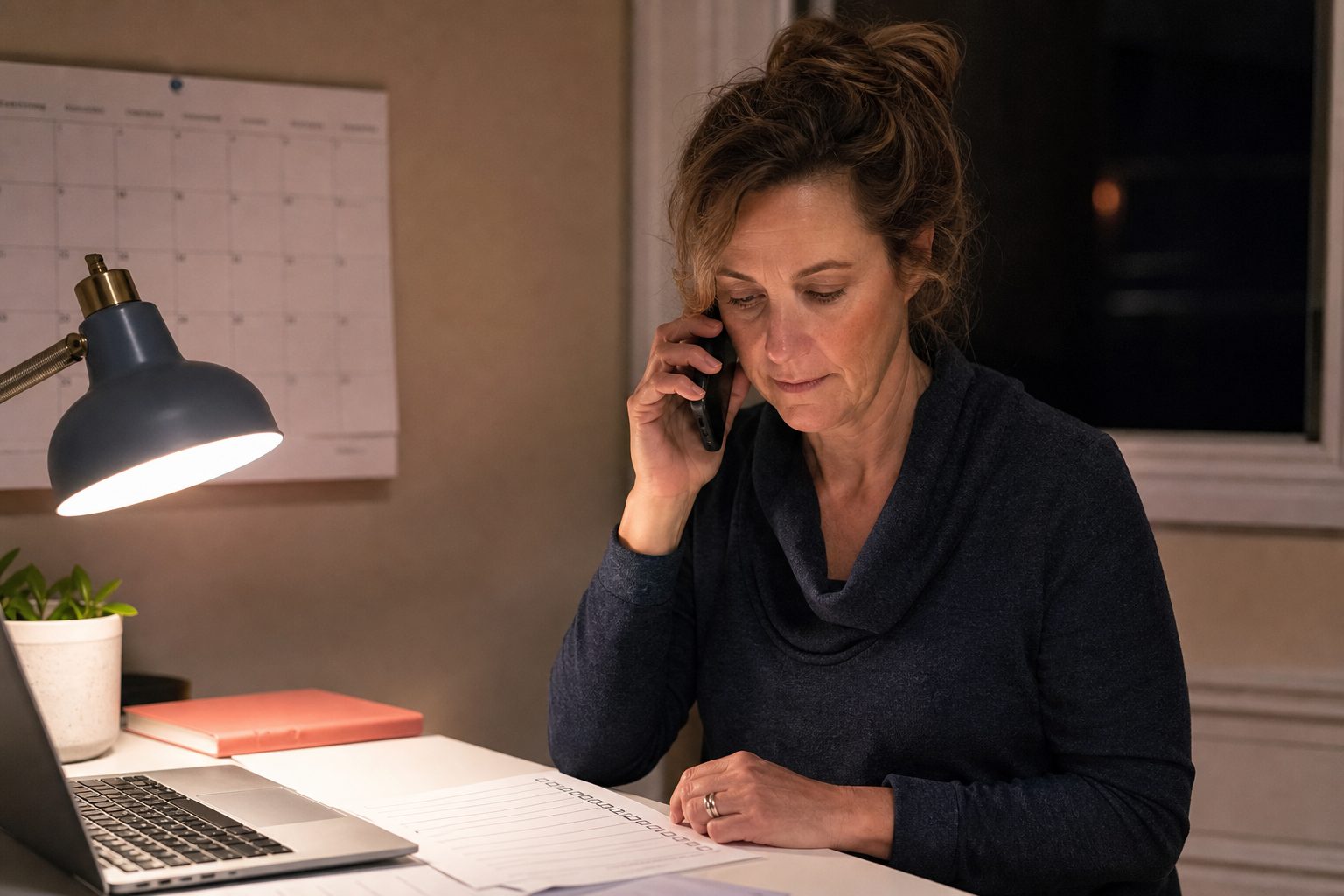
What breaks first when the nearest adult child is a flight away
What fails first is almost never your parent's health. It is the connective tissue: the follow up nobody booked, the refill that lapsed because the pharmacy called a landline, the aide who quit and was never replaced. Distance removes the accidental supervision of a child who drops in and opens the refrigerator.
The second failure is the information channel. What you learn arrives secondhand, late, and from the person with the strongest reason to minimize it. Parents underreport falls, skipped meals and confusion because they are protecting your week.
The third failure is unpriced work. Whoever lives closest absorbs the rides, the grocery runs, the waiting rooms. Nobody assigned it, so it curdles into resentment exactly when you need that person most. The job is a structure that does not depend on one person being free.
Build a local bench before the week you need one
A bench is a list of people near your parent's door, each with one job and a number. Fill the practical slots first: someone with a key, a neighbor who sees the house daily, a pharmacy where staff know your name. Add a primary care office that lists you as an authorized contact and a ride account usable without a smartphone.
Then add institutions. The Area Agency on Aging covering your parent's county is the entry point for meal programs, volunteer transportation and benefits counseling; the federal Eldercare Locator names the right agency for any zip code. None of this moves fast in a crisis, so enroll before there is one.
Every slot needs a backup, because the design fails the month the neighbor with the key goes to Florida. Getting there means the family meeting that assigns a named local backup instead of a general agreement that everyone will help. Put the roster on one page, date it, and send it to everyone on it.
The geriatric care manager: what one does and what one costs
A geriatric care manager, now usually called an aging life care professional, is private, paid eyes in your parent's city. The field draws mainly from nursing and licensed social work. The title itself is unregulated in most places, so ask which license the person holds, whether it is active in your parent's state, and which body issued any credential after the name, then verify it on the state board's lookup.
The work opens with a comprehensive assessment: a home visit covering function, cognition, safety and supports, then a written report with recommendations. Ask in advance how long the visit is scheduled and what the report will contain, because both are set by the engagement letter, not by a standard. A care manager also sits in on specialist visits, screens home care agencies, mediates between siblings, and takes the hospital's call at night.
Price comes in two layers: a flat fee for the assessment, hourly for everything after. Ask what increment time is billed in, a quarter hour or six minutes, whether travel and calls to siblings are billable, and whether there is a retainer or monthly minimum. Ask whether crisis and after hours work carries a higher rate, whether monitoring is sold as a package, and whether the firm takes payment from agencies it recommends. Get the fee schedule in writing, and compare two firms in the same metro because rates track the local market.
This is private pay. Medicare pays a physician practice for care coordination it bills itself; it does not reimburse a family for hiring an independent care manager, and health insurance generally will not either. Some long term care policies reimburse care coordination, so check that provision in the policy before assuming. A care manager holds no legal authority, cannot sign for your parent, and does no hands on personal care.
Turn every visit into an inspection with a written punch list
Write down what you intend to check before you fly, and give the inspection its own block of time on the first morning. Count the pills in each bottle against the fill date and see whether the arithmetic works. Look at the mail: unopened envelopes, shutoff notices, solicitations in hand addressed envelopes.
Walk the house the way an inspector would, not the way a guest does. The hazards and the order to take them in are laid out in the room by room walkthrough that gives a visit its punch list. Photograph what you find, including the medicine cabinet: pictures from an earlier visit are the only reliable way to see slow change. Turn the findings into a punch list with three columns, what, who and by when, and put a name beside anything you cannot do from home.
The weekly rhythm: one call for facts, one call for company
Combining logistics with connection ruins both, so split the week into two calls. The first is short, at a fixed time, with an agenda you reuse: appointments, refills due, deliveries, the aide schedule, anything that arrived in the mail. "What did you eat yesterday" produces information; "Are you eating all right" produces reassurance.
The second call carries no agenda at all. It exists so your voice is not permanently attached to an inventory of failures. If siblings are involved, rotate who takes which call.
Add a third channel that does not run through your parent. Once a month, call the neighbor or the aide, ask what they have noticed, and log it with dates. The value shows up when a neurologist asks when the confusion started and you answer with a week, not a shrug.
Remote eyes: the technology that helps and the technology that only annoys
Useful devices report on routine instead of watching a person. A locking automatic pill dispenser that alerts you when a dose window closes untouched tells you something no phone call will. A medical alert pendant with fall detection and a cellular base works when the internet does not. Whatever you add, ask permission and name the worry it answers, because consent decides whether it stays plugged in. Add one thing at a time, and route every alert to two people.
The annoying category is larger. Interior cameras pointed at living space breed resentment and end up unplugged, costing the goodwill you need for the device that matters. Any device that depends on a password reset your parent has to perform, or a wearable that has to be taken off and charged every night, adds a daily step that eventually gets skipped, and a device that is off the wrist or offline reports nothing.
See how CareCircleLog keeps a parent's medications, appointments and aide shifts in one shared log
The signals that mean book the flight now
Sort what you hear into slow drift and acute change. Drift widens over months and belongs on the punch list; acute change appeared over hours or days, and in an older adult that is a medical event until a clinician says otherwise. New confusion, incontinence or an unexplained fall is often infection, dehydration or a drug effect, and needs same day evaluation.
Other signals earn a flight even when your parent sounds fine. Unexplained weight loss with a full refrigerator. Two falls in a month, injury or not. A pharmacy reporting a prescription never picked up, or an agency reporting no access at the door. Scorch marks on a pan, the same clothes on three video calls, a new name on an account.
Treat the car as its own instrument panel. Fresh scrapes on a bumper, or a mirror taped back on, are the dents and the near misses that say the driving question is now open. Book more nights than the problem seems to need, because assessments, home care intakes and specialist openings rarely line up inside three days.
Keep the paperwork portable and reachable from an airport
Build a one page face sheet you can open on a phone with a weak signal. It carries name and date of birth, Medicare number and plan names with member IDs, the pharmacy, medications, allergies, physicians, and who holds health and financial authority. Triage and the admitting clinician will copy from that page, and it removes the guesswork about medications, allergies and who may be told anything.
Behind it, keep scans of the documents that decide who can act: financial power of attorney, health care proxy, HIPAA authorization, advance directive, insurance and Medicare cards, and the face sheet. Which documents you need, and the errors that void them, is a subject of its own. Own the folder with a sibling rather than in one account, and download the files for offline use before you fly. Many practices accept only their own HIPAA form, so the scan is a reference copy, not a substitute for filing that form at each office.
Make yourself reachable inside the systems that will call: get listed as an authorized contact at each practice and the pharmacy, and request proxy access to every portal. Reconsideration and grievance forms ask for dates, call reference numbers and the name of the representative who gave each answer, so keep the note as the calls happen. A log written at the time is the only record a reviewer can check against the plan's own notes.
Protect the visit so it is not only errands
If every trip is an audit, your parent starts dreading your arrival and hiding things. Front load the inspection and appointments into the first day, then buy your way out of the rest. Grocery delivery, a cleaner and a paid ride to the podiatrist are legitimate uses of money by the sibling who cannot be there.
Then protect one block with nothing scheduled in it. Take the drive your parent likes, go to the diner, ask about the parts of their life unrelated to health. Unstructured time is when a parent volunteers what a checklist call never surfaces: the friend who stopped calling, the stairs they have started avoiding, the bill they did not understand.
Next week, do four things. Write the bench roster with a named backup in every slot and send it to everyone on it. Put two recurring calls on the calendar, one factual and short, one with no agenda. Request portal proxy access and authorized contact status at the primary care office and the pharmacy. Then draft the punch list for your next visit and book a trip long enough to sit in on one appointment.
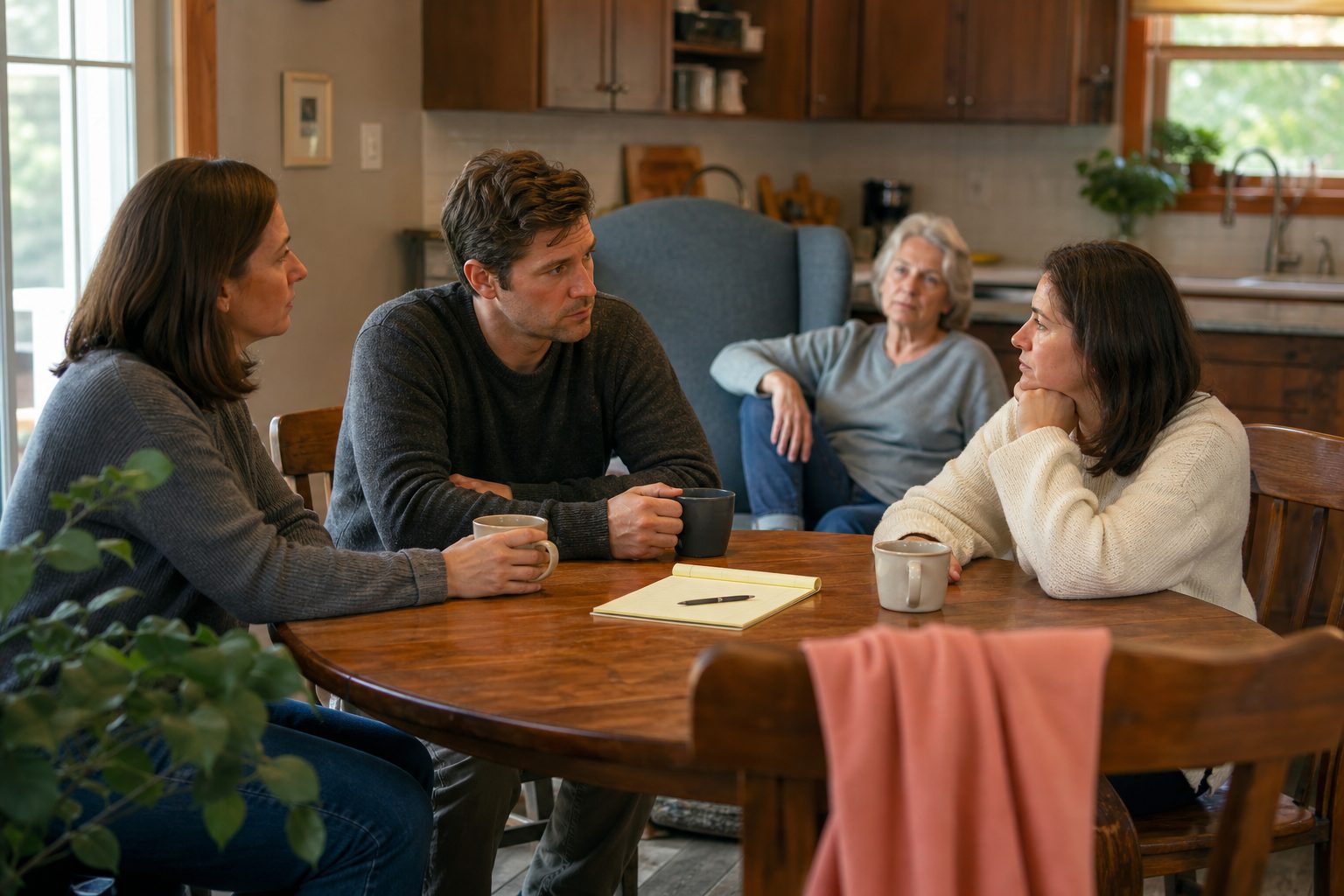
The First Family Care Meeting: How to Divide a Parent's Care
Care is almost never assigned. It lands on whoever picked up the phone the day the hospital called. Here is how one ninety minute meeting turns a vague family promise into named duties, named backups and a written record every sibling can see.

A Room by Room Fall Prevention Walkthrough of a Parent's Home
Falls put more older adults in the hospital than anything else that happens at home. Walk the house in this order, fix the cheap things first, and learn which changes Medicare will flatly refuse to pay for.

When a Parent Should Stop Driving, and How That Talk Goes
Age by itself is a poor test. What actually predicts a crash, how a driving rehabilitation specialist settles the argument with data, and what happens when a family reports a driver to the state.