checklist
A Room by Room Fall Prevention Walkthrough of a Parent's Home
Falls put more older adults in the hospital than anything else that happens at home. Walk the house in this order, fix the cheap things first, and learn which changes Medicare will flatly refuse to pay for.
Before you start: the three STEADI screening questions and a medication review
Before tackling physical changes to the home, begin with a quick assessment of your parent's fall risk. The CDC's STEADI initiative recommends three screening questions: Has your parent fallen in the past year? Do they feel unsteady when standing or walking? Do they worry about falling? If the answer is yes to any of these, your parent is at higher risk for a fall.
Next, review all medications with a pharmacist or primary care doctor. Certain medicines, such as those for blood pressure, sleep, anxiety, or pain, can cause dizziness or drowsiness. Even over-the-counter remedies and supplements may interact poorly. Ask about side effects and whether doses should be adjusted or medications changed to lower fall risk.
Bring a complete list of all medicines, including vitamins and herbal products, to each review. Many falls are linked to drug interactions or sudden drops in blood pressure after standing. Knowing exactly what your parent takes is as important as fixing loose rugs or adding grab bars.
Keep reading: What an In Home Aide Really Costs: Rates, Minimums, Overtime
Entry and steps: thresholds, handrails, lighting and package clutter
Falls often happen before you even get inside. Start at the street or driveway and walk the route to the front door. Look for uneven pavement, loose stones, or raised thresholds. If there is a step up, make sure at least one sturdy handrail is present and in good repair.
Thresholds taller than half an inch can trip anyone. Weatherstripping or threshold ramps can level out minor rises. Entryways should have nonslip mats or textured surfaces for traction, especially if shoes get wet.
Lighting and deliveries
Poor lighting compounds the danger. Install bright bulbs at the entry and along the approach to the door. Sensor lights or dusk-to-dawn bulbs remove the need to remember switches. Check that the switch by the door is easy to reach, with no furniture or clutter in the way.
Packages and shoes often pile up near entrances. Set up a bin or shelf for deliveries and a rack for shoes to keep walkways clear. Avoid welcome mats that curl at the edges or slide around.
Bathroom: grab bars, transfer benches and the raised toilet seat question
The bathroom is ground zero for falls. Wet floors, slippery tub surfaces, and tight quarters turn minor slips into major injuries. Focus on three main areas: shower or tub, toilet, and flooring.
Grab bars
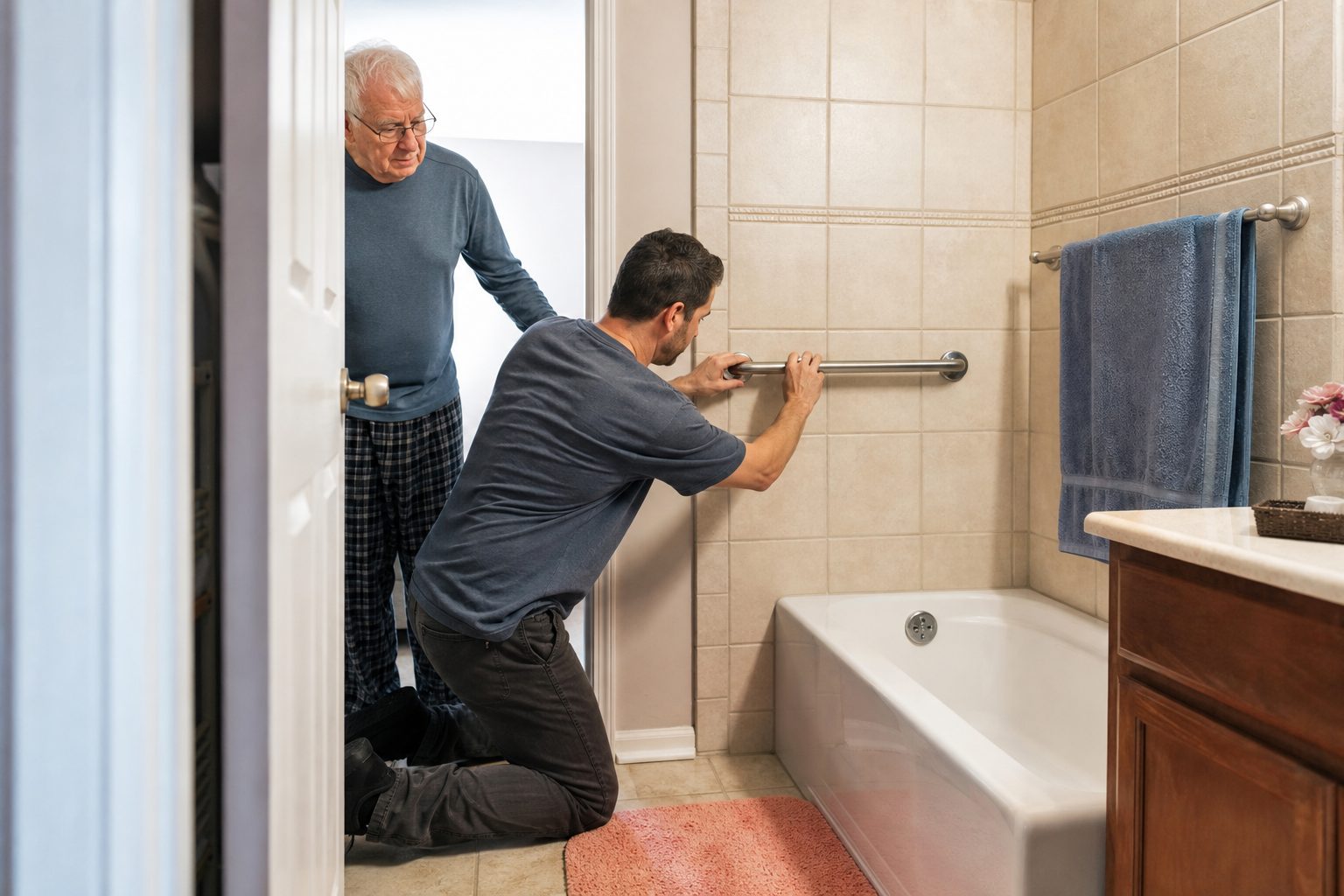
Install grab bars inside the shower or tub and on the wall next to the toilet. These must screw into wall studs, not just tile or drywall. Suction cup bars do not hold when weight is applied and should not be trusted for safety. The bar should be easy to grip, with a textured finish for wet hands.
Transfer benches and seating
A shower chair or transfer bench lets your parent sit while bathing. A bench that extends over the tub's edge allows safer entry and exit. Test for wobble and stable footing before regular use. Nonslip mats both inside and outside the tub or shower add another layer of protection.
Raised toilet seat question
Not every older adult needs a raised toilet seat, but for those who struggle to stand from low seating, it can make a big difference. Some seats attach securely to the toilet, while others are freestanding frames. Inspect the seat after installation to be sure it does not shift or tip.
Keep a nightlight in the bathroom for nighttime use, and use high-contrast tape on the edge of the tub to make it easier to see. Store towels and toiletries within easy reach to avoid stretching or bending.
Keep reading: Inside a PACE Center: How All Inclusive Elder Care Runs a Day
Bedroom and the whole path to it at three in the morning
Trips to the bathroom at night are a major fall hazard. Start with the route from bed to bathroom. Remove loose rugs and make sure the floor is clear of shoes, cords, and small furniture. Nightlights or motion-sensor lights, placed low along the wall, can guide your parent without harsh glare.
Bed height should allow your parent's feet to touch the floor easily when sitting at the edge. If the bed is too high, consider a shorter frame. If it is too low, a sturdy riser may help. Keep a lamp within reach of the bed and check that it is easy to switch on in the dark.
Encourage your parent to practice getting out of bed slowly. Sitting for a few seconds before standing allows blood pressure to adjust, reducing the risk of dizziness. If a walker or cane is used at night, it should be parked within arm's reach, never across the room.
Kitchen: reach zones, banning the step stool and the burner shutoff
The kitchen brings its own set of risks. Many falls occur while reaching for items overhead or from unstable chairs or stools. Rearrange frequently used items, like dishes, pans, and pantry staples, so nothing important is stored above shoulder or below knee height.
Banning the step stool
Step stools and chairs are leading culprits in kitchen falls. Family caregivers should remove stools and ladders from the kitchen entirely. If a light bulb or smoke detector needs changing, schedule it for a time when you can do it yourself or with safe equipment.
Burner shutoff and safety devices
Install stove knob covers or automatic shutoff devices for forgetfulness or emergencies. These gadgets can cut power or gas if a burner is left on too long. Also, check that handles of pots and pans are turned inward to prevent bumping and spills.
Use nonslip mats in front of the sink and stove, but secure the corners with double-sided tape to prevent curling. Store cleaning supplies and trash bins out of main traffic areas to avoid tripping hazards.
See how CareCircleLog handles this for senior and family caregiving
Hallways and stairs: rugs, cords, contrast on the top step
Hallways must be kept wide and clutter-free. Remove or tape down any throw rugs. Small rugs bunch up underfoot and can catch on walkers or canes. If a rug must stay for warmth or comfort, use heavy-duty carpet tape on all sides, and check it regularly for wear.
Cords for lamps, phones, or electronics should not cross walkways. Rearrange furniture or use cord covers to keep paths clear. Hallways should be lit from both ends, with switches easily accessible without crossing the room in darkness.
For stairs, install secure handrails on both sides, from bottom to top landing. Each step should have the same height and depth. To reduce the risk of missing the last step, use high-contrast tape or paint on the top and bottom steps' edge. Consider adding non-skid stair treads for extra grip.
Footwear, vision checks and the annual eye exam nobody schedules
Footwear matters more than many families think. Shoes should be flat, with firm soles that grip well. Avoid backless slippers, flip-flops, or socks without tread. If your parent's shoes are worn down, replace them before falls happen.
Vision changes quietly with age. Even minor cataracts or prescription changes can make stairs and thresholds hard to judge. Schedule an annual eye exam, even if your parent insists their glasses are fine. Update lenses when needed, and clean glasses daily to avoid blurring.
If your parent uses a magnifier or special lighting for reading, check that these aids are handy but not in the way of walking. Good vision, like good footwear, changes the odds in every room of the house.
What Medicare, Medicaid waivers and Area Agencies on Aging will pay to install
Many families wonder what help is available for home modifications. Medicare does not usually pay for grab bars, ramps, or bathroom safety equipment unless your parent qualifies for home health services after a hospital stay, and even then, coverage is limited to medically necessary equipment such as walkers or commode chairs. Shower chairs and raised toilet seats are often considered convenience items and are not covered.
Medicaid waivers, available in many states, sometimes cover home modifications for eligible older adults who meet income and care level rules. This can include grab bars, ramps, and sometimes bathroom changes. Each state's rules are different, so check with your local Medicaid office or case manager.
Area Agencies on Aging can connect families with programs for minor home safety improvements. Some offer free or discounted grab bar installation or home evaluations. Funding is often limited and may require waitlists or income-based eligibility. Veterans may qualify for additional help through the VA if service-connected disabilities are present.
Keep receipts and document every change, since some costs may be deductible as medical expenses or applied to benefits eligibility. If you work with multiple family members or outside aides, a shared log for appointments, medication changes, and installation dates keeps everyone in the loop and prevents costly mistakes or duplicate purchases. Tools like a family caregiving log help coordinate visits, document what has been modified, and track duties through the year, making the home safer for everyone involved.
What an In Home Aide Really Costs: Rates, Minimums, Overtime
The quoted hourly rate is only part of the bill. How an agency builds its price, why four hour minimums exist, what live in care actually means, and what changes the day you hire a caregiver directly.

Inside a PACE Center: How All Inclusive Elder Care Runs a Day
PACE folds a doctor, a day center, therapy and a van route into one Medicare and Medicaid program. A walkthrough of how a center runs from the morning pickup to the team meeting, and the tradeoff families accept.

How to Reconcile a Parent's Medications After a Hospital Stay
A hospital stay rewrites a medication list in ways nobody explains at the door. Here is how to compare the discharge summary against the bottles at home, catch the holds and swaps, and finish with one list everyone trusts.