benefits guide
VA Benefits for a Veteran Parent: Aid and Attendance and Caregiver Support
A veteran parent may already qualify for a monthly pension supplement, a paid homemaker, or a caregiver stipend, and never hear about any of them. What each VA program pays for, who is eligible, and the order to apply in.
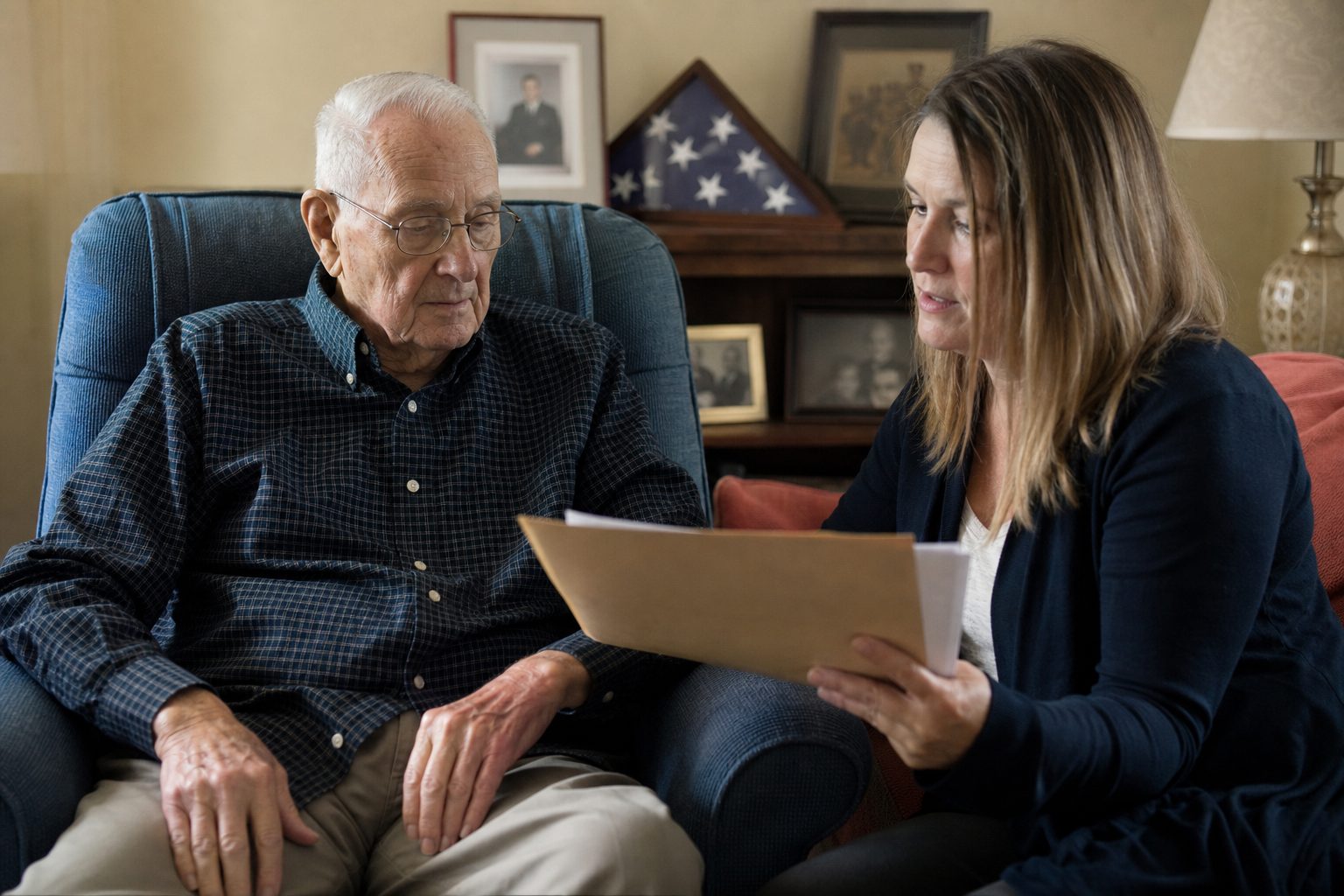
Three separate VA doors, and why families knock on the wrong one
For this purpose the Department of Veterans Affairs is three agencies, not one. The Veterans Benefits Administration pays money: disability compensation, pension, the Aid and Attendance increase, Survivors Pension and Dependency and Indemnity Compensation. The Veterans Health Administration delivers care, from enrollment through Geriatrics and Extended Care. The Caregiver Support Program inside each medical center is the only door where a family member signs the application alongside the veteran and is the one paid.
Staff in one branch cannot move a claim filed in another, and rarely say where to go. A parent can hold benefits behind all three doors at once, and the tests contradict each other: pension and Survivors Pension turn on wartime dates and low countable income, the caregiver stipend on a service-connected rating and no income test at all. Open them in this order: intent to file first, because it holds the effective date; health care enrollment second, because it gates the homemaker programs and Veteran Directed Care; the stipend last, because it needs a compensation rating.
Aid and Attendance is a supplement to a pension, not a separate check
There is no Aid and Attendance application: it is an increase added to a benefit the veteran or survivor already qualifies for. On the needs-based side it raises the maximum annual pension rate, the ceiling VA calculates against. A veteran drawing disability compensation reaches the parallel increase through Special Monthly Compensation, a separate rule set.
VA pays the difference between countable income and that ceiling, so raising the ceiling raises the check. If countable income sits above it, the payment is zero, whatever your parent needs at three in the morning. Housebound is the smaller increase, and a claimant may have one or the other, never both.
Rates change yearly with the Social Security adjustment, so read VA's current rate table, not a brochure. The deduction that changes outcomes is unreimbursed medical expenses: what a parent pays out of pocket for care and premiums reduces countable income above a small threshold. That is why a parent whose gross income looks far too high is often awarded the full rate once a facility bill counts.
The wartime service, income and net worth tests
The first gate is service: ninety days of active duty, one day of it inside a wartime period Congress defined, and a discharge other than dishonorable. Veterans who entered after September 7, 1980 generally need twenty-four months of continuous service. Combat is not required and neither is service overseas: a stateside clerk qualifies and a peacetime infantryman does not.
Wartime periods carry hard statutory dates, and VA publishes the table on its pension eligibility page. The DD214 settles it: check its entry and separation dates against that table, and note any in country Vietnam service, which starts earlier. The Persian Gulf War period has no end date, so service since August 1990 falls inside it.
The second gate is status: sixty-five or older, permanently and totally disabled, in a nursing home, or drawing Social Security disability or Supplemental Security Income. The third is net worth, one limit combining countable assets and annual income, indexed each year, with the home, a vehicle and personal effects excluded; VA publishes the current limit on its pension page beside the rate table. Transfers for less than fair market value since October 18, 2018 fall under a thirty-six month look-back that can create a penalty period.
The medical evidence a physician has to put in writing
The claim rides on VA Form 21-2680, the Examination for Housebound Status or Permanent Need for Regular Aid and Attendance. A physician, nurse practitioner or physician assistant completes it, and the office may charge for the time. It asks whether the claimant can dress, bathe, feed himself, attend to the wants of nature and leave the house alone.
Not every factor has to be met. Any one will do: inability to perform those activities without help, being bedridden, or a mental or physical incapacity requiring regular care against the hazards of daily life. That last factor carries most dementia claims.
A clinician who writes "needs assistance at home" has said nothing VA can rate. Ask what your parent cannot do alone, how often help is needed, and what happens on a day when nobody comes. If your parent is in a facility, VA Form 21-0779 collects the nursing home information.
Inside VA health care: homemaker and home health aide, respite, adult day care
These services have nothing to do with pension. They require enrollment in VA health care on VA Form 10-10EZ, then a clinical assessment by a social worker or the Geriatrics and Extended Care team. Nobody at a regional office can order them.
The Homemaker and Home Health Aide program is the one families ask for by name: VA buys hours from a community agency and the aide handles bathing, dressing, transfers and toileting. Respite comes as an aide at home, days at an adult day center, or a short stay at a VA community living center, capped each year. Adult Day Health Care adds nursing oversight and meals; Home Based Primary Care sends a team to the house.
These programs will not staff an overnight shift, will not pay a relative, and set hours by clinical need rather than by request. Extended care copays may apply depending on priority group and service connection. Before treating a monthly pension supplement as the answer, set it beside the hourly agency rate this monthly benefit has to be measured against.
Veteran Directed Care: a monthly budget the veteran controls
Veteran Directed Care hands over the checkbook. VA contracts with the aging network, Area Agencies on Aging and Aging and Disability Resource Centers, which assess need and set the budget. The veteran picks his own workers, and in most cases that can include an adult child.
Eligibility runs through health care enrollment and a clinical finding that the veteran needs nursing home level of care. The program is not at every medical center, so ask whether the local facility has a provider agreement. The budget is not cash: it buys approved services and goods written into the plan. It does not buy prescriptions, and since many veterans keep Medicare drug coverage alongside VA pharmacy, understand how a VA prescription sits alongside a Part D plan before dropping either.
See how CareCircleLog keeps a parent's medications, appointments and aide shifts in one shared log
The Program of Comprehensive Assistance for Family Caregivers
Every VA medical center has a Caregiver Support Coordinator whose whole job is this application. The gate is narrow: enrollment in VA health care, the service-connected rating the current PCAFC regulation sets, seventy percent or higher, and in person personal care for at least six continuous months, for an activity of daily living or for supervision and protection. VA has revised those criteria by rulemaking before, so confirm the threshold in force with that coordinator before assuming a parent is out.
Wartime service does not open this door, and neither does age, income, era of service, or a needs-based pension. The rating does, and a parent who never filed a compensation claim has nothing here until it is decided. The rating and the personal care finding are the whole test.
The stipend goes to the Primary Family Caregiver, not the veteran, set from a federal pay scale rate for his locality and paid at one of two levels. The package adds CHAMPVA coverage for a caregiver with no other health plan, training, and at least thirty days of respite a year. Apply on VA Form 10-10CG, a joint application you both sign, and expect reassessments that can lower a level. When the gate closes, families fall back to the general caregiver program, which pays no stipend, and to the Medicaid version of a family caregiver stipend.
Survivor benefits when the veteran was the parent who died
Often the parent you care for is the widow, and the service that matters is her husband's. Survivors Pension is the needs-based benefit for a surviving spouse or unmarried child of a wartime veteran, running on the same machinery: his service dates, the same net worth limit, the same look-back. The Aid and Attendance increase attaches exactly as it does to a veteran's own pension.
Dependency and Indemnity Compensation runs on other logic: a flat monthly rate, not needs based, paid when the veteran died of a service-connected condition or while rated totally disabled for a period the statute sets. A survivor cannot draw both, so VA pays the greater, and VA Form 21P-534EZ applies for both at once. An application filed within a year of death reaches back to the first of the month he died, and accrued benefits must be claimed in that year.
Where to file, who may help for free, and who is not allowed to charge you
VA Form 21-0966, the intent to file, sets an effective date and holds it for a year while you gather papers, and an award is paid back to that date. The claim goes on VA Form 21P-527EZ for a living veteran or 21P-534EZ for a survivor, with the 21-2680 attached, at va.gov or mailed to the Pension Management Center. Health care and caregiver applications go to the medical center instead.
Next week, do five things in order. Find the DD214, and if it is missing, request it from the National Archives. File the 21-0966 the same day, before the medical form is done. Book a primary care appointment whose stated purpose is completing VA Form 21-2680, then call the medical center for the Caregiver Support Coordinator and the Geriatrics and Extended Care social worker. Last, start a folder for unreimbursed medical expenses and put every aide invoice and pharmacy receipt in it, because that folder turns an apparently ineligible parent into an awarded one.
Book the free help the same week. Federal law limits preparing and presenting a claim to accredited attorneys, accredited claims agents and veterans service organization representatives; county veterans service officers do it at no charge. Locate your county office, take the first appointment offered, and sign VA Form 21-22 there so the officer can work the file. Nobody may charge for preparing an initial claim; an accredited agent may charge only after VA issues a decision. Refuse anyone who offers a free review and then sells an annuity or trust to move assets under the net worth limit: the look-back turns that into a penalty period.

What an In Home Aide Really Costs: Rates, Minimums, Overtime
The quoted hourly rate is only part of the bill. How an agency builds its price, why four hour minimums exist, what live in care actually means, and what changes the day you hire a caregiver directly.

Getting Paid to Care: Inside Structured Family Caregiving
Several state Medicaid programs pay a live in family caregiver a daily stipend. This follows one composite case built entirely from program rules, from the level of care screen to the notes the state expects every day.

Part D Drug Costs: The Out of Pocket Cap, Extra Help and Appeals
Medicare now caps what a parent pays out of pocket for covered drugs in a calendar year, and lets that amount be spread across the months. What the cap reaches, what sits outside it, and how to fight a plan that refuses a prescription.